

Building Your First Budget Without Feeling Restricted
Learn how to create a realistic budget that actually works for your lifestyle. We'll show you how to structure a budget without feeling deprived.
Most people don't know where their money goes each month. We'll show you a method that takes just five minutes a week to maintain.


You've probably heard this before — tracking your spending is important. But here's the thing: it's not about being obsessive or cutting out every coffee. It's about clarity.
When you don't track spending, money disappears. You'll get to the end of the month and wonder where it all went. That feeling of "I thought I had more"? It's because you genuinely don't know what you spent. We're talking subscriptions you forgot about, small purchases that add up, maybe a few trips to the store that cost more than expected.
The good news: you don't need a complicated system. Five minutes a week is genuinely enough. Most people find that once they start tracking, they naturally spend less — not because they're restricting themselves, but because they're actually aware.

A straightforward approach that takes minutes to set up and maintain
Pick one method and stick with it. A simple spreadsheet works fine — columns for date, category, and amount. Or use your phone's notes app. Or a dedicated app like YNAB or Goodbudget. The tool matters far less than consistency. Whatever you'll actually use is the right choice.
Once a week — maybe Sunday evening or Friday morning — sit down for five minutes and record what you spent. Check your bank app, your receipts, your wallet. Group similar purchases: groceries, transportation, entertainment, subscriptions. You'll spot patterns fast. Like, you'll notice you're spending $40 a week on takeout when you thought it was less.
At the end of each month, look at your totals by category. Don't judge yourself — just observe. "I spent $200 on groceries, $120 on gas, $80 on coffee." That's information. Then decide: is that aligned with what you want? If yes, great. If not, what's one category you'd adjust next month?
Sarah, who works in Halifax, started tracking three months ago. She uses a simple Google Sheet with four columns: Date, Category, Amount, Notes. Every Sunday at 8 PM, she spends about four minutes entering the previous week's spending.
Her categories: Groceries, Transportation, Utilities, Entertainment, Subscriptions, Clothing, Miscellaneous.
In week one, she was surprised to see $65 in subscription costs — apps she'd forgotten about. She cancelled three and saved $35/month immediately. By week four, she noticed entertainment spending was $180 one week, $40 the next. That variation showed her where the flexibility actually existed.
She wasn't making drastic cuts. She was just seeing reality. And that changed how she approached money decisions. When she wanted to spend $30 on something, she'd think, "I know my entertainment budget is roughly $120-150 a month. Where does this fit?" Instead of guessing.

Most people stumble on the same things. Here's what to watch for:
You'll burn out. Start with weekly reviews. Once that's automatic, you can add more detail if you want. But most people find weekly is enough.
If something doesn't fit neatly, don't agonize. Put it in "Miscellaneous" or create a catch-all. The goal is insight, not perfection. Rigid systems get abandoned.
It's easier than you think to let it slide. Set a specific day and time — "Every Sunday at 7 PM, I review spending." Treat it like a small appointment with yourself.
If you withdraw cash, keep receipts or jot down what you spent. Cash is easy to lose track of, and that's exactly where money disappears.
Disclaimer: This article is informational only and is not financial or medical advice. Every person's financial situation is unique. Please consult with a qualified financial advisor about your individual circumstances if you need personalized guidance.
You don't need anything fancy. Here are options ranging from zero-cost to simple apps:
Start with what you have. A pencil and notebook work. A free spreadsheet works better. Whichever tool you'll actually use is the best tool.
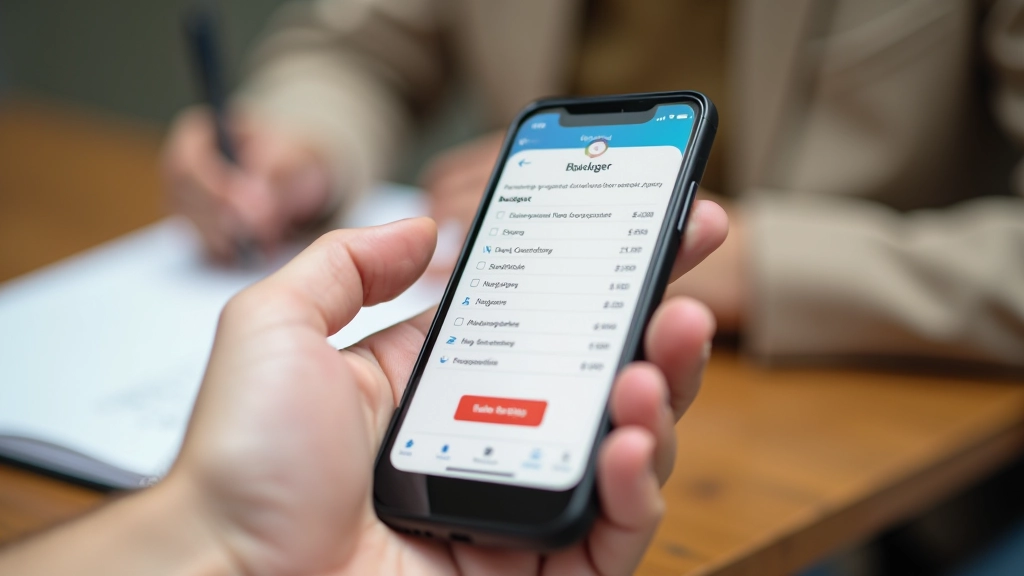
Here's what most people discover after a few weeks of tracking: money stops being mysterious. You're not guessing anymore. You're not stressed about "where did it all go?" You know. And when you know, you have power.
You might decide to spend more on groceries because that matters to you. You might cut back on subscriptions. You might realize you're already spending well and just needed confirmation. Whatever you decide comes from actual data, not anxiety.
Five minutes a week. That's the investment. The payoff? You'll feel genuinely in control of your money. Not restricted. Not guilty. Just aware. And awareness changes everything.
Learn how to create a realistic budget that actually works for your lifestyle. We'll show you how to structure a budget without feeling deprived.

You don't need a huge income to save for emergencies. We'll show you how to build a safety net, even with limited resources.

Debt doesn't have to control your life. We'll break down different approaches to managing debt and building a path forward.